
Travel plans can change unexpectedly due to personal commitments, weather disruptions, medical emergencies, or schedule conflicts. Understanding the Delta Refund Policy can help travelers make informed decisions when canceling or modifying their flights.
Whether you purchased a refundable ticket, a non-refundable fare, or used Delta eCredits, knowing your refund options is essential. In this guide, we’ll explain Delta refund rules, cancellation policies, eligibility requirements, and the refund process for 2026. Information in this guide is based on Delta’s published policies and traveler guidance.
Understanding Delta’s Refund Policy
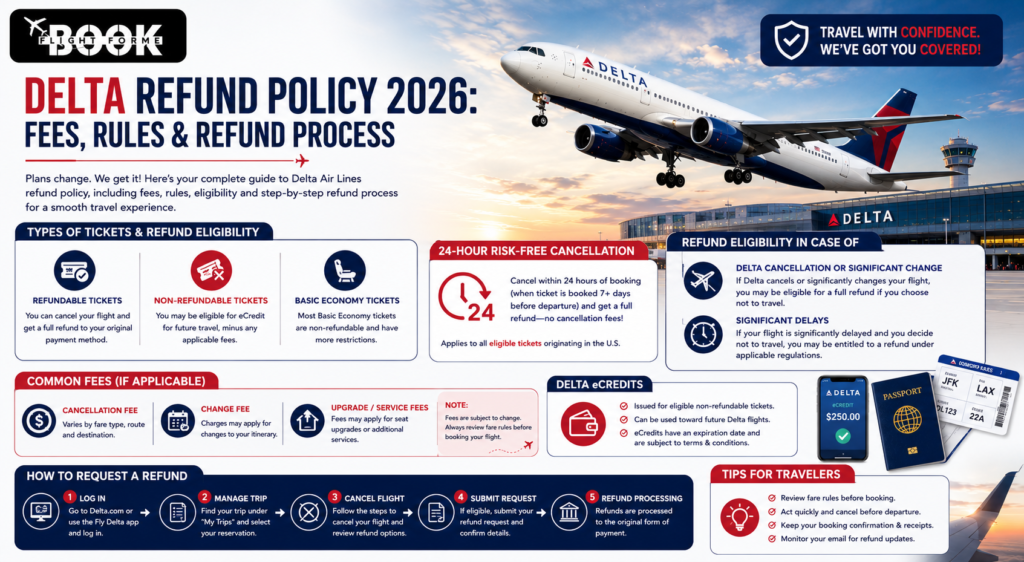
Delta Air Lines offers both refundable and non-refundable ticket options. The type of ticket purchased largely determines whether a traveler can receive a cash refund or travel credit.
In many cases, refundable tickets qualify for refunds back to the original form of payment, while non-refundable tickets may be eligible for eCredits that can be used toward future travel.
Before canceling a flight, travelers should review their fare conditions and reservation details carefully.
Delta 24-Hour Risk-Free Cancellation
One of the most traveler-friendly features offered by Delta is its 24-hour risk-free cancellation policy.
Passengers who book qualifying tickets originating in the United States can cancel within 24 hours of purchase and receive a full refund without cancellation fees. This applies even if the fare is normally non-refundable.
This policy allows travelers to correct booking mistakes or reconsider travel plans shortly after purchase.
Refundable Tickets
Refundable tickets provide the greatest flexibility for travelers.
If a passenger purchases a refundable fare and later decides not to travel, they can generally cancel the reservation and request a refund to the original payment method, subject to applicable fare rules.
Refundable tickets are often preferred by business travelers and individuals whose schedules may change frequently.
Benefits of Refundable Tickets
- Greater flexibility
- Eligible cash refunds
- Easier itinerary modifications
- Reduced cancellation concerns
- Convenient travel planning
Although refundable tickets typically cost more than non-refundable fares, they provide valuable peace of mind.
Non-Refundable Tickets
Most travelers purchase non-refundable tickets because they are generally more affordable.
If a non-refundable ticket is canceled before departure, Delta typically issues the remaining ticket value as an eCredit rather than a cash refund. Depending on fare conditions, certain fees may apply.
Passengers should always cancel before departure because unused tickets that are not canceled in advance may lose their remaining value.
Understanding Delta eCredits
Delta eCredits function as travel credits that can be applied toward future Delta bookings.
These credits may generally be used for:
- Future flight purchases
- Ticket exchanges
- Reissued reservations
- Applicable taxes and fees
Delta eCredits are subject to expiration dates and specific terms and conditions.
Basic Economy Refund Rules
Basic Economy tickets often have more restrictions than other fare types.
Travelers holding Basic Economy tickets should carefully review the cancellation and change rules associated with their booking. Depending on the itinerary and circumstances, cancellation fees may apply, and any remaining value may be issued as an eCredit.
Because fare rules can vary, passengers should verify the terms applicable to their specific reservation.
Flight Cancellations by Delta
If Delta cancels a flight or significantly changes the itinerary, passengers may have additional options.
In many situations, Delta first attempts to rebook affected travelers on alternative flights at no additional cost. If a passenger chooses not to accept the revised itinerary, refund eligibility may apply depending on the circumstances.
Travelers should review available options carefully when a schedule disruption occurs.
Significant Delays and Schedule Changes
Flight disruptions can sometimes trigger refund eligibility.
Under airline and consumer protection guidelines, passengers may be entitled to a refund if a significant schedule change or cancellation occurs and they decide not to travel. Eligibility depends on the circumstances and applicable regulations.
Travelers should monitor flight notifications and review any rebooking options offered by the airline.
How to Request a Delta Refund
Delta provides several ways for travelers to request refunds or manage canceled reservations.
Online Account Access
Passengers can access their reservation through Delta’s website or mobile application.
Manage My Trip
Travelers can locate their booking and review available cancellation, refund, or eCredit options.
Customer Support Assistance
For more complex situations, Delta customer support representatives may assist with refund-related requests.
Refund Request Submission
Depending on the situation, travelers may need to complete a refund request through Delta’s designated refund channels.
Refund Processing Time
Refund processing times vary based on payment method and circumstances.
Several factors may affect processing, including:
- Original payment method
- Ticket type
- Reservation status
- Verification requirements
- Banking procedures
Travelers should monitor their payment accounts and reservation updates after submitting a request.
Situations That May Affect Refund Eligibility
Refund eligibility can be influenced by several factors.
Examples include:
Voluntary Cancellation
If the traveler chooses not to travel, refund options depend on fare conditions.
Airline-Initiated Changes
Schedule disruptions may create additional refund opportunities.
Unused Tickets
Unused refundable tickets may qualify for reimbursement under applicable fare rules.
Missed Flights
Failure to cancel before departure may affect the remaining value of some ticket types.
Tips for Maximizing Refund Opportunities
Travelers can improve their chances of a smooth refund experience by following a few best practices.
Review Fare Rules Before Booking
Understanding fare conditions before purchase helps avoid surprises later.
Save Booking Documentation
Keep confirmation emails, ticket receipts, and reservation records.
Act Quickly
Address cancellations or schedule changes as soon as possible.
Monitor Airline Communications
Stay informed about flight changes, delays, or cancellation notices.
Understand eCredit Terms
Review expiration dates and usage conditions for any travel credits received.
Frequently Asked Questions
Can I get a full refund from Delta?
Refund eligibility depends on the ticket type, cancellation timing, and specific circumstances. Refundable tickets generally offer the most flexibility.
What happens if I cancel a non-refundable ticket?
In many cases, travelers receive an eCredit for future travel after applicable conditions are met.
Does Delta offer a 24-hour cancellation policy?
Yes. Eligible tickets can generally be canceled within 24 hours of booking for a full refund.
Can I receive a refund if Delta cancels my flight?
Depending on the circumstances, passengers may qualify for a refund if they choose not to accept an alternative itinerary.
Conclusion
The Delta Refund Policy provides several options for travelers depending on their ticket type and travel circumstances. Whether you purchased a refundable fare, a non-refundable ticket, or need assistance due to a flight disruption, understanding the available refund and eCredit options can help you make better travel decisions.
Before canceling any reservation in 2026, review your fare rules carefully, monitor airline notifications, and act promptly to maximize your available options. By staying informed, travelers can navigate changes confidently and reduce unnecessary travel stress.
