
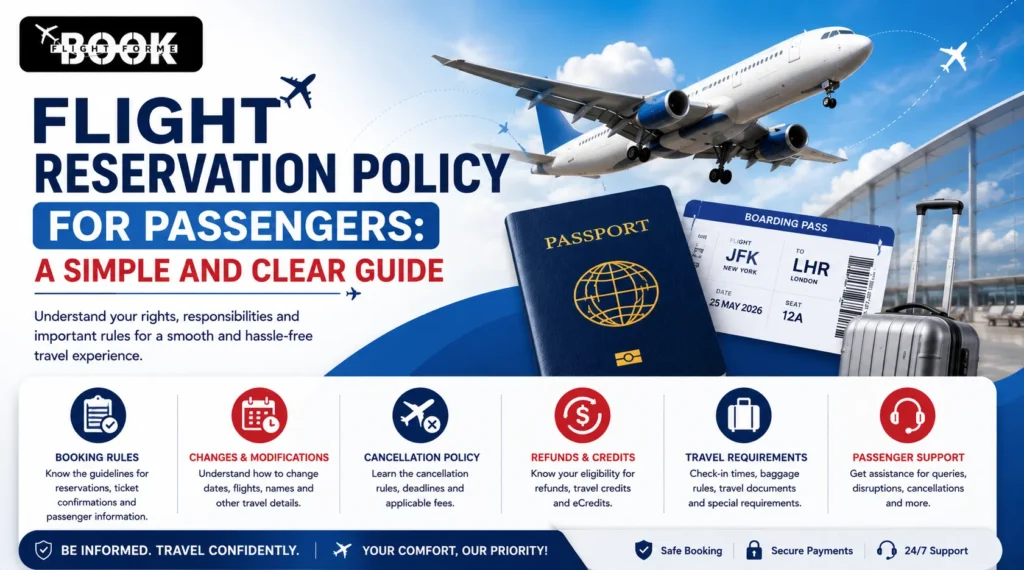
Booking a flight should feel simple, but one small mistake can turn a normal trip into a stressful one. A wrong name, a missed rule, or a hidden fee can cost time and money, so understanding flight reservation policy is important before you confirm any ticket.
What the Policy Means
A flight reservation policy is the set of rules that explains how a passenger can book, hold, change, cancel, or manage a flight ticket. In simple words, it tells you what happens after you click “book now” and what rights or limits you have as a traveler. Airline ticketing documents also show whether a passenger can modify an itinerary, cancel a flight, or get a refund.
This policy may include:
- Fare rules.
- Ticket validity.
- Refund conditions.
- Change charges.
- Name correction rules.
- Baggage and seat rules.
- Time limits for payment or confirmation.
Why It Matters
Many travelers focus only on the ticket price and ignore the policy behind it. That is risky because two cheap tickets can have very different rules, and one may be much harder to change or refund than the other. Common booking mistakes often happen because people do not read the fine print carefully.
Knowing the policy helps you:
- Avoid extra charges.
- Correct mistakes faster.
- Understand refund timing.
- Choose the right fare.
- Travel with less stress.
Booking Basics
When you book a flight, the airline usually asks for your name, travel date, route, contact details, and sometimes passport information. After booking, you may get a reservation number or PNR, which helps you manage the trip later. Some airlines also allow a short 24-hour window or “look-in” style option under certain conditions, while rules can differ by airline and booking method.
A simple booking flow looks like this:
- Search for flights.
- Compare fare rules.
- Enter passenger details carefully.
- Make payment.
- Receive confirmation and ticket.
- Review the policy again before travel.
Common Passenger Mistakes
Many problems start with very small mistakes. The most common ones include typing the wrong name, booking the wrong date, picking the wrong airport, or not checking baggage rules. Some travelers also forget that change and cancellation terms may be stricter on cheaper fares.
Other common mistakes are:
- Booking too quickly without reading fare rules.
- Ignoring layover time.
- Forgetting passport validity for international travel.
- Missing the airline’s own correction deadline.
- Assuming every ticket is refundable.
Changes and Refunds
Change and refund rules are one of the most important parts of any reservation policy. In India, recent passenger-friendly updates reported in February 2026 added a 48-hour review window for some bookings, free name correction in certain situations within 24 hours, and refund timelines for eligible cases. These rules can vary depending on how the ticket was booked and how close the departure date is.
Usually, refund rules depend on:
- The fare type.
- The booking channel.
- Whether the ticket is refundable.
- The time left before departure.
- The airline’s fare conditions.
Name Correction
Name mistakes are very common, especially when someone books in a hurry. A small spelling error may be easy to fix, but a major name mismatch can create boarding problems. According to the recent passenger rule update mentioned in the source, some airlines must allow free name correction within 24 hours of booking when the ticket is booked directly through the airline website, but conditions apply.
Best practice:
- Check spelling before payment.
- Match the name with your government ID or passport.
- Correct errors immediately after booking.
- Save screenshots or emails in case support is needed.
Baggage and Seats
Your reservation policy may also explain baggage allowance, seat selection, and extra service fees. This matters because a low ticket price can become expensive once you add baggage or seat charges. The U.S. Department of Transportation’s buyer guidance also highlights comparing ticket restrictions and optional service fees, which shows why reading the full fare details is important.
Before booking, check:
- Cabin baggage allowance.
- Checked baggage weight.
- Seat selection fees.
- Meal charges.
- Priority boarding fees.
Policy Comparison Table
| Policy Area | What to Check | Why It Matters |
| Fare rules | Refundable or non-refundable | Decides your flexibility |
| Name details | Spelling and ID match | Prevents boarding issues |
| Change rules | Reschedule charges | Helps if plans change |
| Refund timing | How long refund takes | Helps manage money |
| Baggage | Weight and size limits | Avoids airport fees |
| Seat selection | Free or paid seating | Controls total cost |
How to Book Smart
A smart booking process starts before payment, not after. Read the fare rules, compare airlines, and make sure every detail is correct before you click confirm. Many travel guides and airline booking pages recommend checking the full reservation conditions because those rules decide what you can change later.
Use this simple checklist:
- Compare total cost, not just base fare.
- Read refund and cancellation terms.
- Check baggage and seat rules.
- Confirm names and dates.
- Save the confirmation email.
Product and Service Blocks
If you want to add product-style boxes inside the blog, these work well:
- Flight Booking Checklist PDF.
- Airport Transfer Booking Service.
- Travel Insurance Plan.
- Flight Change Assistance Service.
- International Travel Document Guide.
These can be shown as helpful extras rather than hard sales offers. That keeps the page useful and easier to trust.
Visual and Design Ideas
For a blue-colour theme, use:
- Dark blue headings.
- Light blue section cards.
- White background with blue highlights.
- Blue buttons for calls to action.
- Simple icons for booking, refund, baggage, and name correction.
For visuals, you can add:
- A booking process diagram.
- A refund timeline graphic.
- A booking mistakes chart.
- A “before booking checklist” image.
- A small animated progress line showing booking steps.
I also created files that can help support the article visuals and structure: a checklist CSV, a blue-theme cover concept, and a service-importance chart.
Extra Trust Tips
If you want the article to feel strong and reliable, explain that airline rules can differ by carrier and fare type. That means readers should always check the exact policy shown before payment, especially for international flights, promotional fares, and last-minute bookings. Recent airline and regulator guidance also shows that passenger rights and refund handling can change over time, so keeping the article updated is valuable.
Conclusion
A flight reservation policy is not just small print. It is the rulebook that helps passengers avoid mistakes, understand their rights, and book with confidence. If your blog explains these points in simple language, adds clear headings, a table, internal links, and useful visuals, it will be easier for people to read and easier to rank.
