
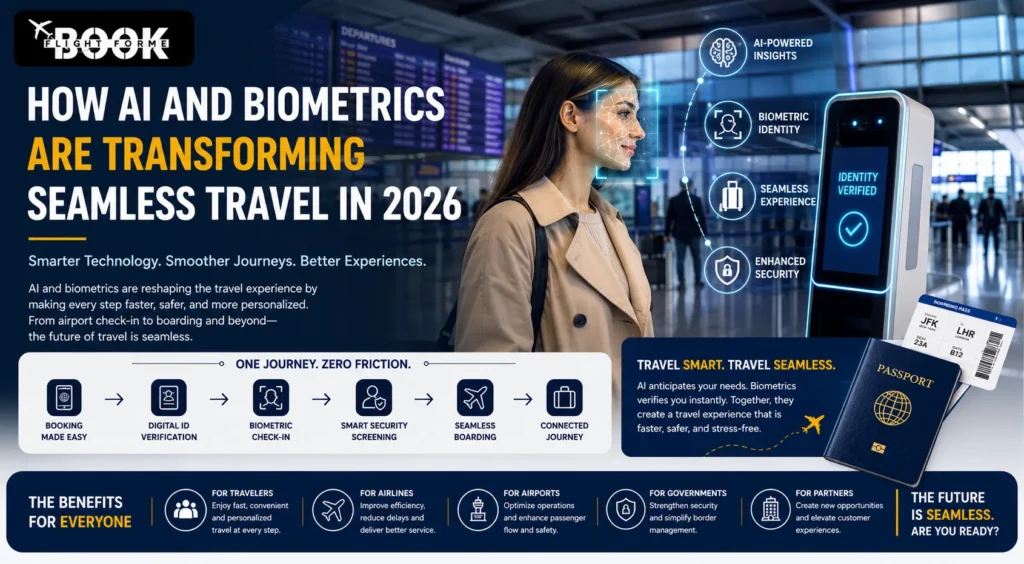
The travel industry is undergoing a remarkable transformation, driven by advancements in Artificial Intelligence (AI), biometrics, and digital identity technologies. Travelers today expect convenience, speed, and personalized experiences at every stage of their journey. Long queues at airports, repeated identity checks, and time-consuming verification processes are increasingly being replaced by innovative solutions that make travel smoother and more efficient.
As airlines, airports, hotels, and border authorities embrace digital transformation, AI and biometrics are emerging as the foundation of seamless travel. These technologies are not only improving operational efficiency but are also enhancing security and customer satisfaction. In 2026, the vision of a fully connected travel experience is becoming a reality.
The Growing Need for Seamless Travel
Modern travelers demand frictionless experiences similar to those they encounter in online banking, e-commerce, and mobile applications. People can open bank accounts, verify identities, and complete transactions digitally within minutes. Naturally, travelers expect the same level of convenience when booking flights, checking in, passing through security, and crossing international borders.
Traditional travel processes often involve multiple checkpoints where passengers must repeatedly present passports, boarding passes, and identification documents. These repetitive steps can lead to delays, congestion, and frustration. AI and biometric technologies help eliminate these inefficiencies by creating a connected travel ecosystem where identity verification happens securely and automatically.
Understanding Biometrics in Travel
Biometric technology uses unique physical characteristics such as facial recognition, fingerprints, or iris scans to verify a person’s identity. Unlike traditional identification methods, biometrics provide a highly secure and convenient way to confirm traveler identity.
Today, biometric systems are being integrated across various stages of the travel journey, including:
- Airport check-in
- Security screening
- Boarding gates
- Immigration checkpoints
- Hotel check-in
- Car rental services
Instead of repeatedly showing documents, travelers can verify their identity using facial recognition technology. This creates a faster and more convenient experience while maintaining high security standards.
Digital Identity: The Foundation of Future Travel
Digital identity acts as a secure electronic representation of a traveler’s personal information. It allows individuals to verify their identity without constantly presenting physical documents.
A trusted digital identity can include:
- Passport information
- Travel history
- Visa details
- Loyalty program memberships
- Security clearances
- Biometric verification data
When connected through secure platforms, digital identities enable travelers to move seamlessly between airlines, airports, hotels, and transportation providers.
As digital identity adoption grows, travelers may soon manage their entire journey using a smartphone or digital wallet, eliminating the need for paper documents and reducing travel-related stress.
How AI Enhances the Travel Experience
Artificial Intelligence plays a crucial role in transforming travel by analyzing large amounts of data and making real-time decisions. AI systems can understand traveler preferences, predict disruptions, and provide personalized recommendations throughout the journey.
Some key applications of AI in travel include:
Personalized Travel Recommendations
AI can analyze traveler behavior and preferences to offer customized flight options, hotel recommendations, and travel packages.
Smart Customer Support
AI-powered chatbots and virtual assistants provide instant support, helping travelers manage bookings, answer questions, and resolve issues quickly.
Disruption Management
Flight delays, weather disruptions, and schedule changes can significantly impact travel plans. AI helps airlines identify potential disruptions early and recommend alternative solutions before problems escalate.
Predictive Airport Operations
Airports use AI to predict passenger flow, optimize staffing levels, and reduce congestion during peak travel periods.
The Power of Combining AI and Biometrics
While biometrics verify traveler identity, AI helps interpret and act on the information generated throughout the journey. Together, these technologies create a highly personalized and frictionless travel experience.
Imagine arriving at an airport where:
- Your identity is verified automatically using facial recognition.
- Security clearance is completed before arrival.
- Boarding happens without presenting documents.
- AI guides you through the fastest route to your gate.
- Personalized notifications keep you informed about delays or gate changes.
This level of integration allows travel providers to deliver exceptional experiences while improving efficiency and security.
Benefits for Travelers
The integration of AI and biometrics offers numerous advantages for passengers.
Faster Airport Processes
Automated identity verification reduces waiting times at check-in, security, and boarding.
Enhanced Security
Biometric systems provide accurate identity verification, helping prevent fraud and unauthorized access.
Personalized Experiences
AI-driven insights enable airlines and travel providers to tailor services based on individual traveler preferences.
Reduced Stress
Real-time updates and automated processes help travelers navigate complex journeys with confidence.
Contactless Travel
Biometric technology supports touchless interactions, creating a more hygienic and convenient travel environment.
Benefits for Airlines and Airports
Travel providers also gain significant operational advantages through AI and biometric technologies.
Improved Efficiency
Automation reduces manual processes and allows staff to focus on higher-value tasks.
Better Resource Allocation
AI helps airports optimize staffing, gate management, and passenger flow.
Increased Customer Satisfaction
Faster processes and personalized services contribute to a better overall travel experience.
Enhanced Operational Visibility
Connected systems provide real-time information, enabling faster and more informed decision-making.
Real-World Implementation
Several airports and governments have already begun deploying biometric travel solutions.
In many international airports, facial recognition technology allows passengers to move through security and boarding checkpoints without presenting physical documents. Some border control agencies are also implementing automated systems that use biometrics to verify travelers while they walk through designated corridors.
These initiatives demonstrate how digital identity and biometric technologies can significantly reduce processing times while maintaining strong security standards.
Addressing Privacy and Security Concerns
While the benefits of AI and biometrics are substantial, privacy remains an important consideration.
Travelers want assurance that their personal information is protected and used responsibly. To address these concerns, organizations must implement:
- Strong encryption standards
- Secure data storage practices
- Transparent consent mechanisms
- Compliance with privacy regulations
- Clear policies regarding data usage
Building trust is essential for widespread adoption of biometric travel solutions.
The Future of Travel in 2026 and Beyond
The future of travel is increasingly connected, intelligent, and personalized. As AI and biometric technologies continue to evolve, travelers can expect even greater convenience and efficiency.
Future innovations may include:
- Fully digital travel identities
- AI-powered travel assistants
- Predictive journey management
- Smart border crossings
- Personalized airport experiences
- Automated hotel and transportation services
The ultimate goal is to create a seamless travel ecosystem where every stage of the journey is connected through trusted digital identity and intelligent technology.
Conclusion
AI and biometrics are revolutionizing the travel industry by eliminating friction, improving security, and delivering highly personalized experiences. From airport check-in and border control to hotel arrivals and transportation services, these technologies are transforming how people travel in 2026.
As digital identity becomes more widely adopted and AI capabilities continue to advance, travelers can look forward to faster, safer, and more convenient journeys. The future of seamless travel is no longer a distant vision—it is rapidly becoming the new standard for the global travel industry.
